

Choosing between a slide-on camper and a caravan isn't just about purchase price—it's about understanding the complete financial picture over years of Australian adventures. With the average caravan costing $75,000 and slide-on campers ranging from $20,000-$55,000+ in 2026, the upfront difference seems obvious. But hidden costs can quickly erase that gap.
Most buyers focus solely on the sticker price, overlooking registration fees, insurance premiums, fuel consumption differences, campground accessibility charges, depreciation rates, and ongoing maintenance costs that significantly impact total ownership expenses over 5-10 years. A caravan might seem like the sensible family choice, whilst a slide-on camper appears budget-friendly.
This comprehensive cost analysis breaks down every expense category with current 2026 Australian pricing, real-world data, and side-by-side comparisons. Understanding the slide on camper vs caravan true cost of ownership helps you make an informed decision based on total expenses, not just initial investment. You'll discover which option genuinely saves money for your specific travel style and budget.
By the end, you'll have a clear financial roadmap for both options over typical ownership periods.
Initial Purchase Costs: Breaking Down the Price Tags
The advertised price represents merely the starting point of your investment. Between manufacturer specifications, essential modifications, and setup costs, both slide-on campers and caravans demand careful budgeting beyond the initial purchase.
New vs Used: Market Prices in Australia (2026)
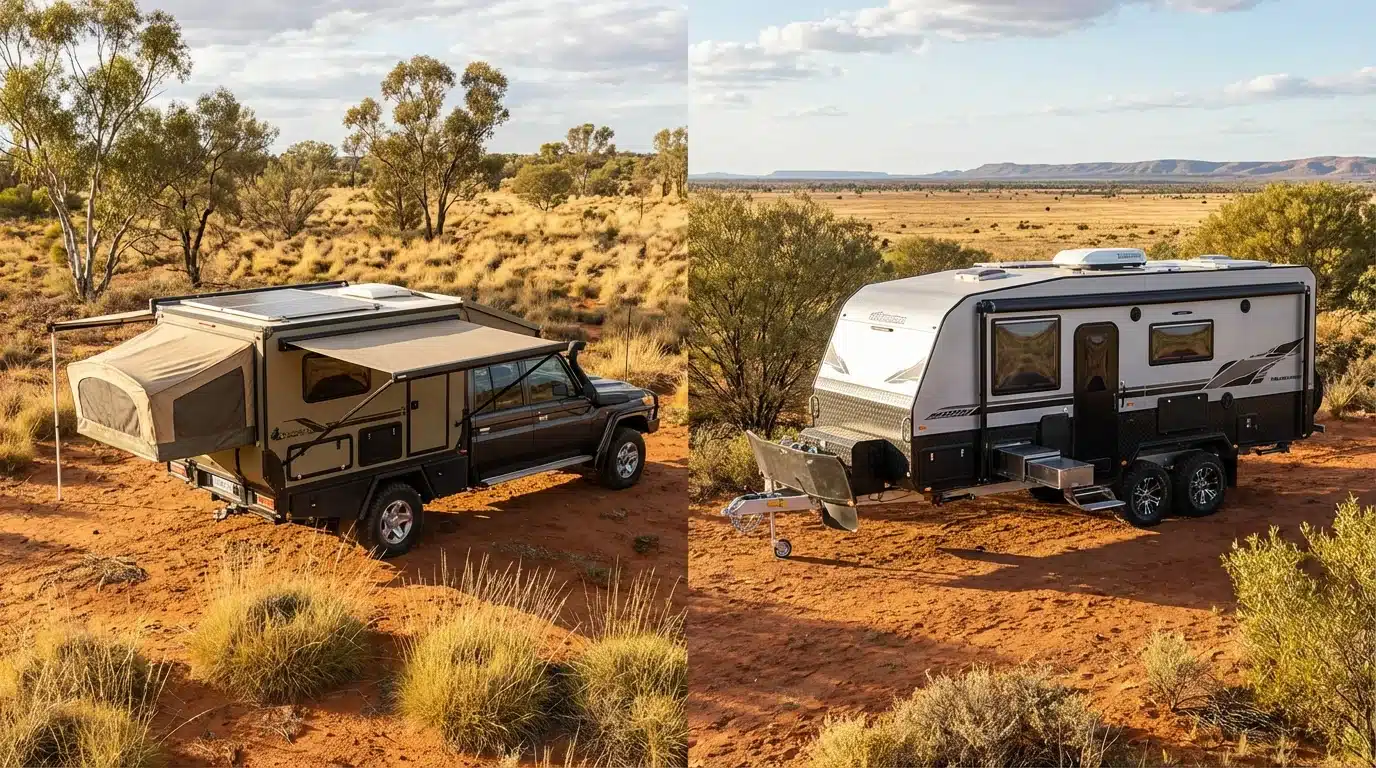
Slide-on camper pricing varies considerably based on build quality and features. Budget models start around $20,000–$30,000, offering basic weather protection and sleeping arrangements. Bottom end class 1 slide on camper options sit between $30,000–$45,000 with improved materials, better amenities, and more robust construction. Premium class 2 unit command $45,000–$60,000+, featuring reinforced construction, comprehensive off-road capability, and equipment designed specifically for Australian conditions. And hard roof class 3 units can exceed 70k.
Caravan pricing presents a broader spectrum. Off-road capable models designed for corrugated roads range from $75,000–$100,000, whilst hybrid camper trailers offer middle ground at $45,000–$85,000. Full-size touring caravans typically cost $90,000–$250,000+, depending on length and fit out.
The used market offers substantial savings for patient buyers. Three-year-old slide-on campers typically trade 30% below new prices, whilst caravans depreciate more sharply at 35–40% below original retail. This depreciation pattern reflects demand dynamics—quality slide-ons from Australian manufacturers hold value exceptionally well compared to mass-produced caravans.
Depreciation analysis over five years reveals slide-on campers retain 65-75% of original value, compared to caravans holding 55-65%. A $50,000 slide-on might sell for $38,000 after five years, representing $12,000 in depreciation. That same investment in a caravan could depreciate to $24,000, losing $16,000 in value. Quality Australian-built slide-ons like Trayon Campers tend to hold their value even better, thanks to strong brand recognition and proven durability in Australian conditions.
Essential Setup Costs and Modifications
Neither option arrives truly "ready to tour" from the dealer. Each requires specific additions before hitting outback tracks safely and legally.
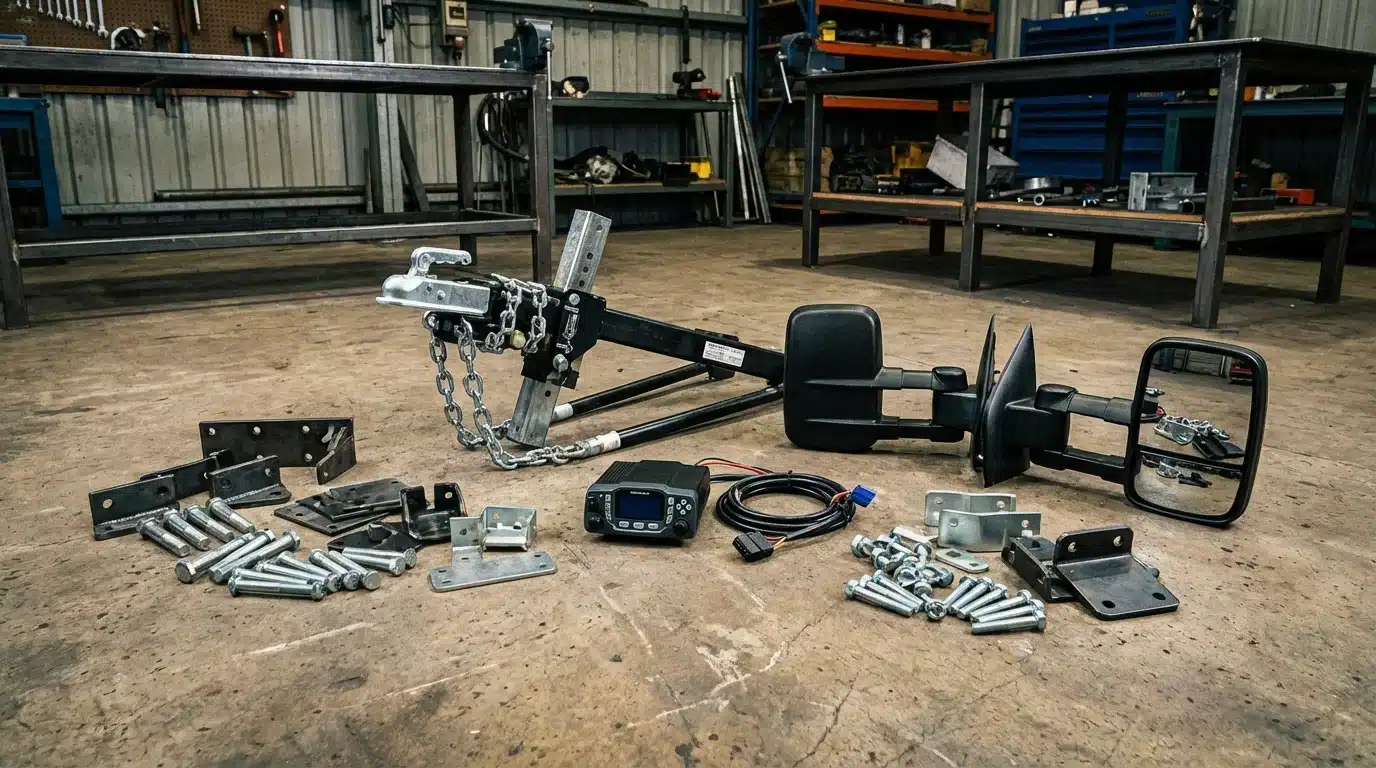
Slide-on campers often require ute modifications to handle payload safely. Dynamic load off road suspension prevent sagging and maintain ride height under load. Heavy all terrain or offroad tyres rated for increased loads ($1000-$2,500 for four) become essential. Total modification costs typically range $2,300-$4,800, though some new utes arrive factory-equipped and ready to go with ample payload capacity and offroad tyres to boot. Often people add other off road modifications like bull bar, roof rack, under body armor etc. But not strictly necessary to carry a slide on camper off road. Some utes may need to be converted to a a flat aluminium or steel tray if it hasn’t been from factory, this can significantly add to the cost between 7,000-15k depending on the bells and whistles.
Caravans require towing gear that many underestimate. Extended towing mirrors ($250-$700) provide legal visibility, whilst weight distribution hitches ($600-$1,200) prevent dangerous sway. Electric brake controllers ($400-$800) enable safe stopping, and many vehicles need towing capacity upgrades ($2,000-$5,000) to legally handle heavier vans. Budget $3,150-$7,400 for proper caravan setup.
Setup Component | Slide-On Camper | Caravan |
|---|---|---|
Suspension upgrades | $1,200-$2,500 | Included in tow vehicle |
Mounting/towing hardware | Included | $600-$1,200 |
Tyres (heavy-duty/matched set) | $1000-$2,500 | $1000-$2,500 |
Brake systems | Included | $400-$800 |
Mirrors/visibility | Standard | $250-$700 |
Towing capacity modifications | N/A | $2,000-$5,000 |
Total Setup Investment | $2,200–$5,000 | $4,250–$9,700 |
Financing Options and Interest Impact on Total Cost
Beyond purchase price, financing costs significantly affect total ownership expenses over time.
Consider a typical five-year loan at current market rates of 8.5% APR (2026). Financing a $35,000 slide-on camper generates approximately $5,800 in interest charges, bringing total repayment to $40,800. That $65,000 caravan incurs $10,800 interest over the same period, totalling $75,800.
These figures assume standard secured loan rates. Personal loans or credit cards carry higher rates (12-18%), potentially adding $8,000-$15,000 to a $50,000 purchase over five years. Cash buyers eliminate this expense entirely whilst gaining stronger negotiating positions with dealers.
The complete upfront investment picture therefore shows slide-on campers requiring $47,300-$65,800 (including modifications and assuming average financing), whilst comparable caravans demand $58,150-$127,400. However, this calculation assumes you already own a suitable tow vehicle for the caravan—if purchasing both vehicle and camper new, costs escalate significantly.
Registration, Insurance and Compliance Costs in Australia
Ongoing compliance costs often catch new owners unprepared. These annual expenses accumulate substantially over a decade of ownership, favouring slide-on campers considerably.
Annual Registration (2026 Rates)
Slide-on campers avoid separate registration entirely. They’re classified as payload carried within your ute’s existing registration, similar to carrying camping gear or tools. Your ute registration alone covers the entire setup, typically costing $600-$1350 annually depending on state and vehicle weight.
Caravans require separate registration in most Australian jurisdictions. Queensland charges approximately $250-$350 annually for caravan registration, whilst New South Wales levies $150-$300 depending on tare weight. Victoria sits around $200-$400, and Western Australia charges $180-$320. South Australia and Tasmania represent exceptions, incorporating caravans under tow vehicle registration without separate fees.
Additionally, some states mandate compulsory third-party insurance for caravans as part of registration, whilst others include it in registration fees. These variations create $150-$400 annual cost differences between jurisdictions—worth considering for full-time travellers choosing domicile states.
Over five years, registration alone costs slide-on owners nothing beyond standard vehicle rego ($1,500-$3,250 total), whilst caravan owners in states requiring separate registration pay an additional $750-$2,000 purely for the van plus the vehicle.
Insurance Premiums: Comprehensive Coverage Comparison
Slide-on camper insurance typically adds $250-$600 annually when included on your ute’s comprehensive policy. Many insurers treat them as accessories, similar to toolboxes or canopies. Stand-alone slide-on policies exist but rarely cost more than $600 for quality units under $50,000 value. Just be mindful that some insurers don’t cover you for off-road use, so you need to shop around if you plan to leave the tarmac.
Caravan comprehensive insurance operates separately, costing $400-$900 yearly for similar replacement values. Premium increases for caravans exceeding $80,000, with luxury models over $120,000 commanding $1,200-$2,000 annually. Insurers typically require secure storage when not in use—either locked garage parking or approved caravan storage facilities.
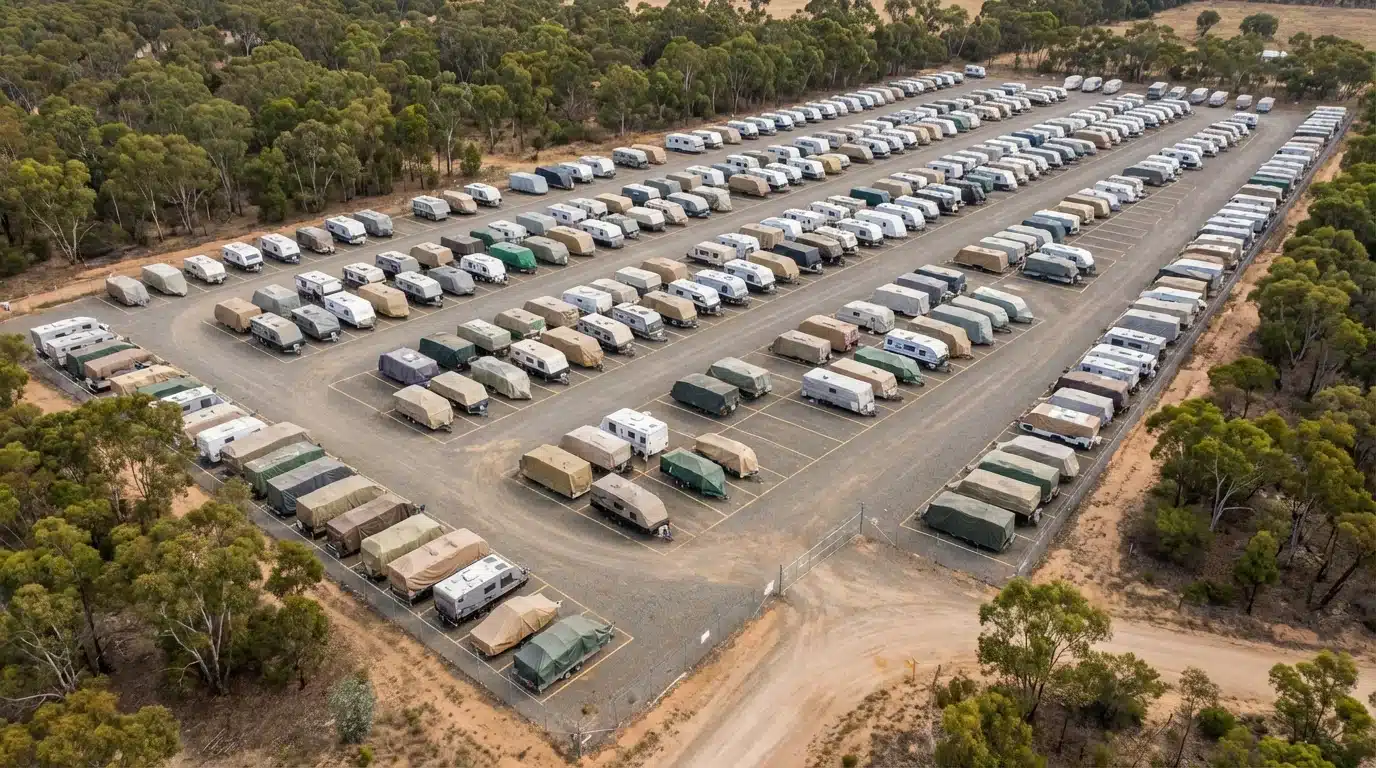
Storage requirements create hidden costs many overlook. Approved caravan storage facilities charge $500-$2,000 annually depending on location and security features. Suburban Melbourne or Sydney facilities command premium rates ($1,500-$2,500), whilst regional areas offer more affordable options ($500-$1,200). Some slide-on campers fit in standard garages or can be lifted off and stored at home without additional fees. Where it is parked may also affect insurance premiums.
Contents insurance applies equally to both options. Comprehensive coverage for camping equipment, personal belongings, and fitted accessories costs $150-$400 annually for either setup, depending on declared values.
Licensing Requirements and Towing Restrictions
Slide-on campers require no special licensing beyond your standard car licence, provided the complete setup (ute plus camper) remains under 4,500kg Gross Vehicle Mass. Most modern dual-cab utes have GVM between 3,000-3,500kg, accommodating slide-ons of 400-800kg within payload capacity. This universality means any licenced driver can operate your setup. Although we do see some people with trucks install slide on campers.
Caravan towing demands careful weight management. Standard car licences permit towing when combined vehicle and trailer weight stays below 4,500kg. Exceed this threshold, and you legally require a Light Rigid (LR) licence—an additional qualification costing $200-$500 depending on state, plus training time.
Weight restrictions create practical limitations. Slide-on campers are constrained by ute payload capacity, typically 800-1,200kg for popular models. Load your camper, add water, fuel, camping gear, and passengers, and you'll approach limits quickly. Exceeding payload capacity risks insurance invalidation, damage and fines. This can get complex because the payload is a finite amount that get's used up quickly, so a slide on with all the bells and whistles can easily tip you over the payload limit of your vehicle. So it's important to know your numbers and see if you need a GVM upgrade.
Caravans face towing capacity restrictions, usually 1,500-3,500kg depending on tow vehicle. More critically, Aggregate Trailer Mass (ATM) compliance requires regular weighbridge certification ($50-$150) to verify you're operating within legal limits. Many Australian tourers unknowingly exceed these limits once loaded with water, gas, food, and gear—risking insurance denial and fines up to $10,000 in states with strict enforcement.
It’s also worth noting there is growing industry discussion around introducing formal towing licence requirements in Australia. A rise in avoidable incidents involving inexperienced drivers towing large caravans has prompted calls for mandatory towing training before drivers can legally tow heavy trailers. While nothing has been legislated yet, it’s a potential future cost — both in time and money — that caravan owners may need to factor in. Slide-on camper owners would be unaffected, as no towing is involved.
The five-year compliance total for slide-on setups averages $4,250-$6,250 (purely ute registration and insurance), whilst caravans accumulate $6,750-$11,500 when including separate registration, higher insurance premiums, and mandatory storage in many cases.
Ready to make an informed decision? Understanding these ongoing costs transforms your purchasing strategy. Factor registration, insurance, and compliance expenses into your budget before committing to either option. The setup that appears cheaper initially might cost substantially more over your ownership period.
Fuel Consumption: The Hidden Cost Difference
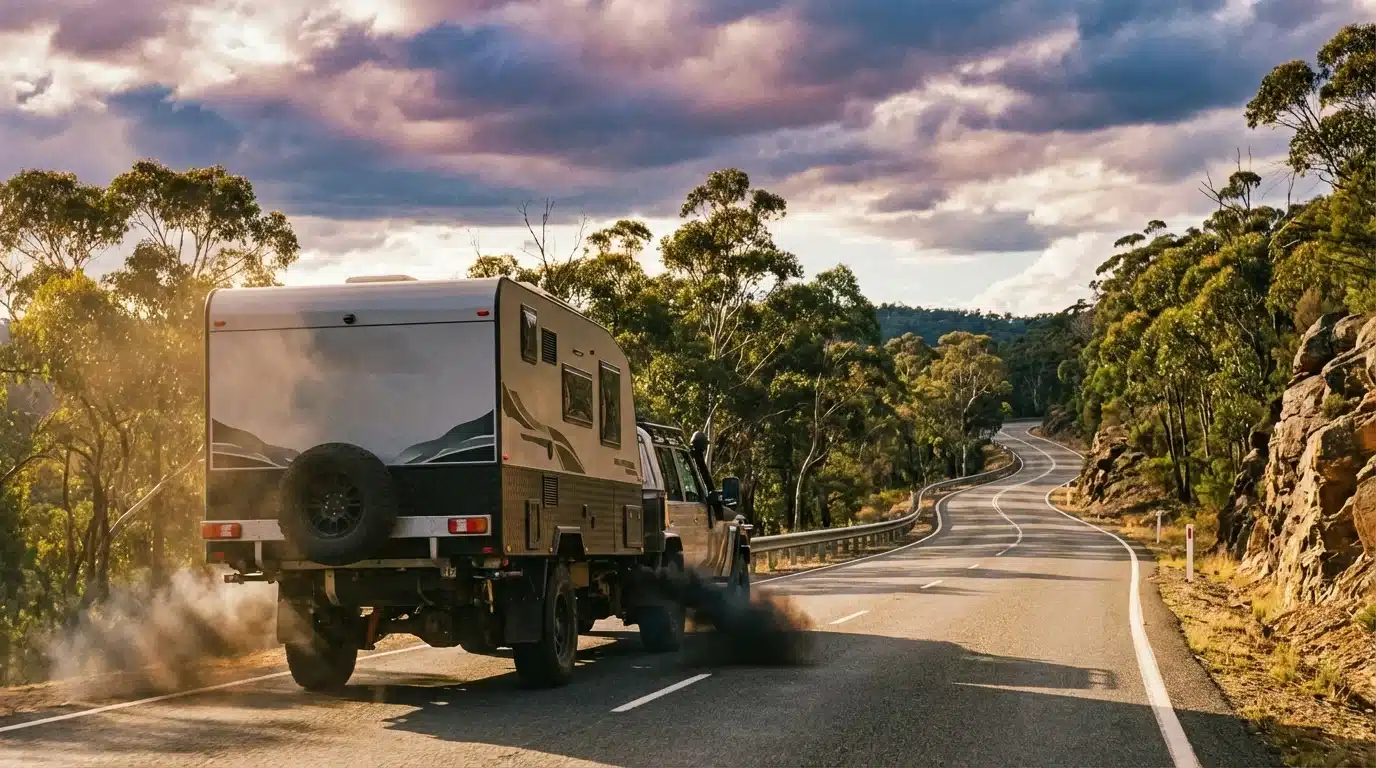
Most buyers fixate on purchase price, but fuel costs over a decade of ownership can exceed the initial investment difference between slide-on campers and caravans. The aerodynamic impact tells a compelling story: towing a caravan dramatically increases fuel consumption by 40-60% from your unladen vehicle, whilst a slide-on camper typically adds just 15-25%.
Real-World Fuel Economy Comparisons
Let's examine actual figures from Australian touring conditions. A modern diesel ute carrying a slide-on camper typically consumes 12-15L/100km on sealed highways and 15-18L/100km when exploring off-road tracks. The same ute towing a comparable caravan jumps to 15-20L/100km on highways and 20-25L/100km on unsealed roads.
The physics are straightforward: caravans create significant wind resistance, particularly their flat fronts catching crosswinds along exposed coastal routes or inland highways. That boxier profile acts like a sail, forcing your engine to work harder at every speed. Slide-on campers, with their lower profile integrated into the ute's existing silhouette, slip through the air with considerably less resistance.
Hill climbing reveals even starker differences. Tackle the climbs between Townsville and Cairns, or navigate the Great Dividing Range, and you'll notice caravans demand frequent downshifting and higher RPMs. This mountainous driving can add another 10-15% to fuel consumption beyond the baseline increase. Slide-on campers maintain closer to normal driving patterns, as the weight sits directly over the rear axle rather than pulling from behind and make for a considerably safer decent being that the weight is on the vehicle not pushing from behind like that of a 3500kg laden caravan.
Annual Fuel Cost Calculations for Typical Travel Patterns
With diesel averaging $1.95-$2.15 per litre in metropolitan areas and climbing to $2.20-$2.50 in regional Australia during 2026, the mathematics become unavoidable. Consider a typical touring pattern of 15,000km annually—a modest figure for serious grey nomads or regular weekend adventurers.
Annual Fuel Costs (15,000km):
Setup Type | Highway Consumption | Off-Road Consumption | Annual Fuel Cost |
|---|---|---|---|
Slide-on camper | 12-15L/100km | 15-18L/100km | $4,095-$5,850 |
Towed caravan | 15-20L/100km | 20-25L/100km | $5,850-$8,625 |
Annual Difference | – | – | $1,755-$2,775 |
That annual difference of $1,755-$2,775 compounds dramatically over time. Project this across ten years of ownership, and slide-on campers cost $40,950-$58,500 in fuel, whilst caravans demand $58,500-$86,250. The cumulative difference—between $17,550 and $27,750—represents a substantial portion of either setup's initial purchase price.
Ferry and Barge Fees: The Cost Nobody Talks About
One of the most overlooked expenses in the slide-on vs caravan debate is the cost of ferry and barge crossings. If you’re planning to explore Tasmania, Moreton Island, K’gari (Fraser Island), Noosa North Shore, Kangaroo Island, or any of Australia’s other island destinations, the price difference between a compact ute and a vehicle-plus-caravan combination can be staggering.
Spirit of Tasmania
The Spirit of Tasmania charges based on total vehicle length and height. A ute with a low-profile slide-on camper like a Trayon typically fits within the standard vehicle category (under 6.0 metres long, under 2.1 metres high) — often booked as a ute with a canopy. A ute towing a caravan, however, gets measured end-to-end including the van, drawbar, and any attachments, pushing you into the oversized vehicle category where fares escalate significantly.
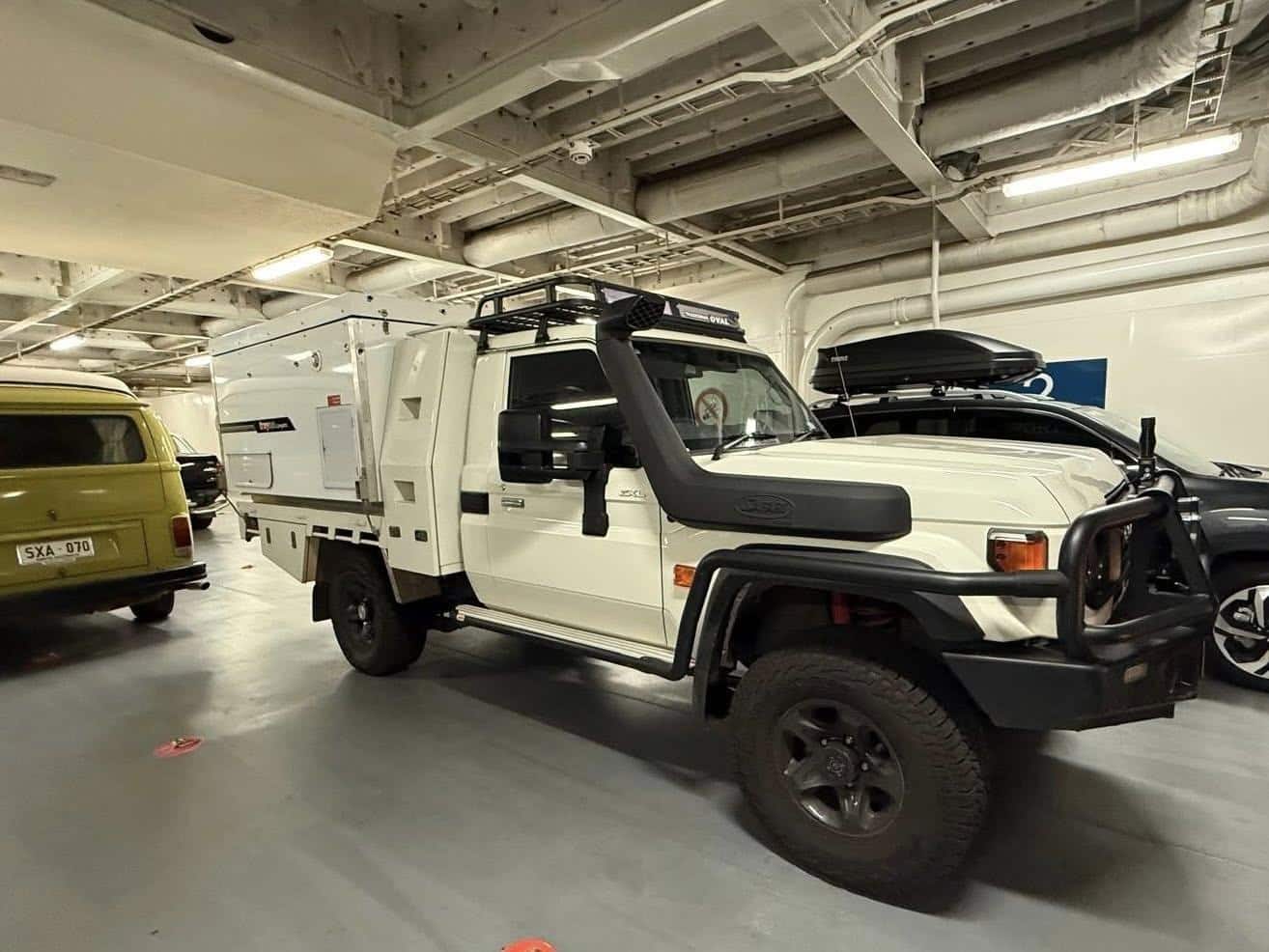
Based on current pricing, a couple with a standard vehicle can expect to pay roughly $350–$1000 return including a cabin, while a ute-and-caravan combination in the 12–14 metre range can cost $1,900–$2,700 return. That’s a difference of $900–$1,200 on a single trip. Visit Tasmania twice over your ownership period and you’ve added $1,800–$2,400 to the caravan’s running costs.
Recently one of our slide on customers booked for mid September 2026 and said “[Trayon] #1442 here, for my Gullwing Cruiser with camper I pay only for the vehicle (no charge for the camper). Fees are calculated on total length and I paid a total of $344 for a one way crossing. Prices vary, but it is considerably cheaper.
Island Barges: K’gari, Moreton Island, Noosa North Shore
The same principle applies to barge crossings closer to home. On the Manta Ray Barge to K’gari (Fraser Island), a standard 4WD costs around $110 return, while a vehicle with a trailer or caravan costs $170–$260 return. The SeaLink ferries from River Heads run $105–$350 per vehicle depending on size, with caravan combinations sitting at the higher end.
These costs apply at Moreton Island, Kangaroo Island, and other barge-access destinations around Australia. Every crossing where your vehicle is measured by total length or classified as “vehicle plus towed unit” means caravan owners pay a premium.
Over a decade of regular touring, ferry and barge fees can add $2,000–$5,000+ to a caravan’s total ownership cost — money that slide-on camper owners simply don’t spend.
Impact of Terrain and Driving Conditions on Consumption
Real-world touring conditions amplify these differences beyond laboratory figures. Heading north to Cape York? Those corrugated tracks and river crossings favour the slide-on's lighter, more manoeuvrable setup. The Gibb River Road's bulldust and rocky sections? Again, slide-ons maintain better fuel efficiency whilst caravans labour under the constant jarring and weight transfer.
Coastal touring along the Great Ocean Road or through Tasmania presents different challenges. The constant elevation changes and winding roads mean caravans spend significant time in lower gears, burning fuel at premium rates. Slide-ons maintain highway efficiency for longer stretches, only increasing consumption during the steepest climbs.
Here's the compelling mathematics: fuel savings alone create a break-even scenario after 6-7 years of regular use. If you initially paid more for a quality slide-on camper, those fuel savings progressively offset any higher depreciation costs. By year eight or nine, you're financially ahead—and that's before factoring in the enhanced accessibility to free camping locations that caravans simply cannot reach.
Is your current setup costing you thousands annually in avoidable fuel expenses? Calculate your typical touring distance against these figures to understand your true 10-year ownership costs.
Recovery and Roadside Assistance
Here’s a scenario that nobody thinks about until it happens: you break down in a remote location. With a slide-on camper, the recovery process is straightforward — a single tow truck loads your ute (camper and all) and you’re on your way. It’s the same recovery process as any other ute on the road.
With a caravan, things get complicated fast. If your tow vehicle breaks down, you now have two units that need to be moved. That often means two tow trucks, or at minimum a more complex and expensive recovery operation. If the caravan itself has a mechanical failure — a blown tyre, broken axle, or seized bearing — you may need a specialist trailer recovery service rather than a standard roadside assist vehicle.
Remote area recoveries are expensive at the best of times. Adding a second unit to the equation can easily double the cost. Standard roadside assistance packages often don’t cover caravan-specific breakdowns or may charge significant excess fees for towing oversized combinations. Premium roadside cover for caravan owners typically costs $50–$150 more annually than standard vehicle cover.
Over a decade of ownership, this represents another $500–$1,500 in additional insurance-style costs for caravan owners — and that’s before accounting for the significantly higher bills if you actually need a remote recovery.
Maintenance: What Each Setup Demands Over Time
Ongoing maintenance is another area where the cost difference between slide-on campers and caravans becomes starkly apparent.
Caravan Maintenance Requirements
A caravan is, in effect, an additional vehicle on wheels. It has its own set of running gear that requires regular servicing — wheels, tyres, wheel bearings, shock absorbers, brakes, brake lines, suspension components, tow hitches, handbrake mechanisms, and electrical connections between the van and tow vehicle. These components wear, corrode, and degrade — particularly on unsealed roads.
A typical caravan service runs $300–$600 annually, covering bearing repacks, brake adjustments, tyre rotations, and general inspections. Tyre replacement on a dual-axle van adds $400–$1,000 every 3–5 years depending on usage. Shock absorbers, brake pads, and other consumables create additional unplanned expenses over the ownership period.
Caravans also require ongoing maintenance of gas systems, electrical systems, plumbing, seals, and roof membranes. Water ingress from deteriorating seals is a common and expensive problem if not caught early — repairs can run into thousands.
Slide-On Camper Maintenance
A slide-on camper has no wheels, no axles, no brakes, no bearings, no tow hitch, and no suspension components of its own. There is simply far less to go wrong mechanically.
Maintenance on a quality slide-on is largely limited to the same items you’d maintain in any camping setup — gas system checks, electrical system inspections, seal maintenance, and general cleaning. Your ute continues to be serviced on its normal schedule regardless of whether the camper is on or off.
Over a ten-year ownership period, caravan owners can expect to spend $5,000–$10,000+ on van-specific maintenance and repairs. Slide-on camper owners typically spend a fraction of that — $1,000–$3,000 — on camper-specific upkeep.
Track Access: When Caravans Get Left Behind
Many of Australia’s best destinations involve tracks and roads that are either closed to trailers or practically unsuitable for towing. This creates a hidden cost that doesn’t show up on any spreadsheet but directly impacts your travel experience and your wallet.
When a caravan owner encounters a trailer-restricted track — or simply decides the road is too rough, too narrow, or too winding to safely tow — they have a choice: skip the destination entirely, or leave the van behind and find an alternative camping setup. That alternative might be a tent, a rooftop tent, or a canopy setup — all of which represent additional purchases on top of the caravan investment.
This happens more often than many buyers expect. Tracks may be officially open to trailers but practically unsuitable — heavy corrugations, tight switchbacks, or soft sand can make towing a caravan risky or simply miserable. Many experienced tourers choose to leave their van at a secure location and explore these areas with a lighter setup.
A basic tent setup costs $200–$500. A quality rooftop tent runs $1,500–$4,000. A fitted canopy with sleeping platform can cost $3,000–$8,000. These are additional expenses that caravan owners bear if they want to access the same destinations a slide-on camper reaches as standard.
A slide-on camper like a Trayon covers it all — remote tracks, beach driving, tight mountain roads — at no extra cost. Your accommodation goes everywhere your ute goes, without compromise and without needing a backup plan.
Making Your Decision: The Investment That Fits Your Adventure
Choosing between a slide-on camper and caravan isn’t just about upfront costs — it’s about understanding the complete financial picture over years of ownership. As we’ve explored, slide-on campers typically deliver lower total ownership costs through fuel efficiency, minimal storage fees, reduced maintenance, cheaper ferry crossings, simpler recovery logistics, and unrestricted track access — whilst caravans offer advantages for those prioritising space and comfort.
Your ideal choice depends on how you’ll actually use it. If you’re tackling remote tracks, want a lighter footprint on your vehicle and the environment, and prefer the freedom of being on the move, a slide-on camper delivers lower upfront costs and ongoing operational savings. Conversely, if you prioritise living space, plan longer stays in one location, and prefer the comforts of established caravan parks, a caravan’s additional investment may be justified by the extra room and amenities.
It’s worth noting that while both setups can handle remote touring, some tracks simply aren’t trailer-friendly — and the wear a heavy caravan puts on both your tow vehicle and the track itself is a real consideration for serious off-road travellers.
The five-year ownership analysis reveals the truth: neither option is universally cheaper. Your travel style, frequency of use, and storage situation determine which delivers better value. A slide-on camper owner covering 15,000km annually saves considerably on fuel, storage, maintenance, and ferry costs, whilst a weekend warrior using caravan parks twice monthly may find a caravan suits their priorities despite the higher operational costs.
If you’re leaning toward a slide-on camper, explore the Trayon range to see how a premium Australian-built unit stacks up for your travel style.


