The 2025 Ford Ranger Plug‑in Hybrid introduces a production hybrid powertrain to the Ranger range. It combines a 2.3 L EcoBoost petrol engine with a 75 kW electric motor, yielding a system output of 207 kW and 697 Nm. Unlike pure‑electric utes, the Ranger PHEV provides up to 49 km of electric driving before reverting to petrol power, and retains the full 3,500 kg braked towing capacity of its diesel counterparts. At face value, an extra 49 km of silent, emissions‑free range could be useful for urban runs—but what are the trade‑offs? How does the PHEV handle real‑world scenarios such as towing heavy trailers or carrying a static load like a Trayon Slide‑On camper?
In this review, we explore the verified specifications, charging performance, pricing structure, and both on‑ and off‑road behaviour. We’ll also consider whether this hybrid ute is a viable option for camping and recreational enthusiasts, particularly those planning to fit a Trayon Slide‑On camper to their vehicle.
Ford Ranger PHEV Specifications and Powertrain
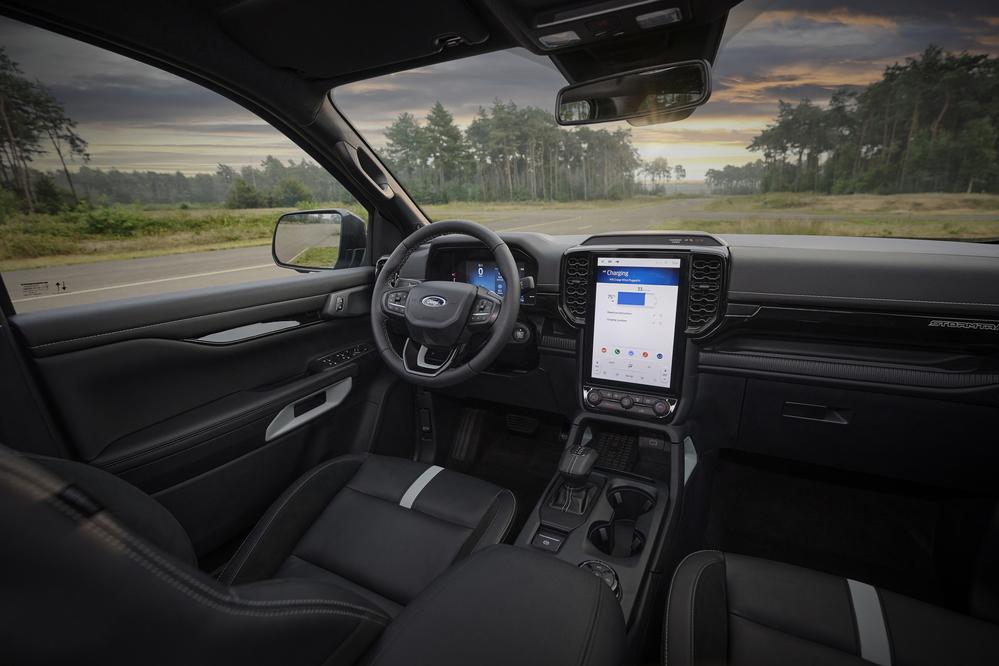
Hybrid Powertrain Layout
- Engine: 2.3 L turbocharged EcoBoost four‑cylinder
- 138 kW @ 4,600 rpm; 411 Nm @ 2,700 rpm
- Electric Motor: 75 kW permanent‑magnet motor integrated between engine and 10‑speed automatic transmission
- Combined Output: 207 kW total power; 697 Nm total torque
Drive Modes
- Auto EV: Automatic blending of petrol and electric power for optimal efficiency
- EV Now: Electric‑only until full acceleration is requested
- EV Later: Preserves battery charge for later use, such as campsite manoeuvres
- EV Charge: Uses the petrol engine to recharge the battery on the move
Real‑World Insight
One would think that instant torque from the electric motor improves low‑speed control—useful when reverse‑parking a camper or navigating tight trails. Under full load, the petrol engine would supplement torque to maintain highway speeds or climb steep gradients.
Battery Capacity, Electric Range and Charging
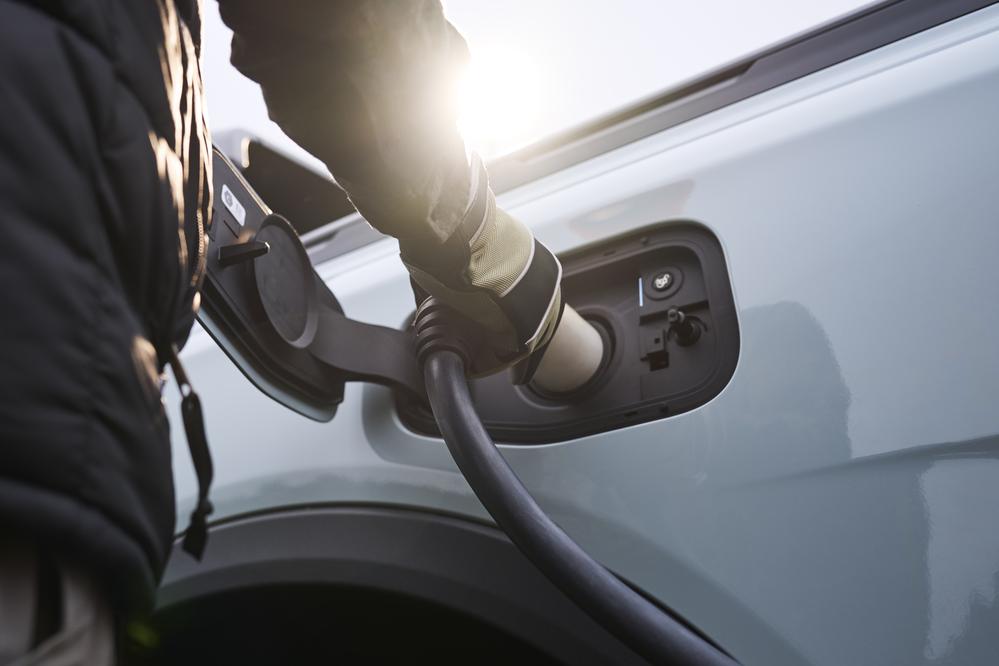
Battery and Range
- Usable Capacity: 11.8 kWh lithium‑ion pack located under the tray (protects cargo space and lowers centre of gravity)
- Electric‑Only Range: 49 km (WLTP)
- Electric Consumption: 18.7 kWh/100 km
- Hybrid Fuel Economy: 2.9 L/100 km combined cycle
Charging Options
- Household outlet (10 A, 230 V) delivers 2.3 kW, taking approximately 6 hours 53 minutes for a full charge.
- Public AC station (15 A, 230 V) delivers 3.5 kW, reaching 100% in about 4 hours.
Regenerative braking recovers energy in stop‑start driving. Scheduling off‑peak overnight charging (10 pm–6 am) typically costs under $5 per full charge.
Practical Note
For tradies or campers who return to base or caravan park each evening, a single overnight plug‑in can cover all next‑day and any local driving. On longer mixed‑use trips, you would need to rely on the fall back petrol engine significantly.
Model Range and Pricing
Available Variants and Features
Ford’s plug-in hybrid Ranger lineup kicks off with the work-ready XLT at $71,990, stepping up through Sport ($75,990) and Wildtrak ($79,990[ variants, before reaching the range-topping Stormtrak at $86,990. Each grade builds on the last with additional luxury and convenience features.
The XLT grade brings practical touches like all-terrain tires and a tough bed liner, while Sport models add leather trim and larger wheels. Wildtrak variants feature unique styling elements and advanced driver aids, with Stormtrak bringing premium Matrix LED headlights and quilted leather seats.
• 12-inch touchscreen with wireless Apple CarPlay/Android Auto
• Pro Power Onboard system with multiple power outlets
• LED daytime running lights and tail lamps
• Autonomous emergency braking with pedestrian detection
• Adaptive cruise control with stop-and-go functionality
• Integrated trailer brake controller
A 5 % import tariff applies because the Ranger PHEV is produced in South Africa, not Thailand.
The PHEV commands a $3,150–5,150 premium over diesel V6 variants but offers potential savings through reduced fuel consumption and lower maintenance on brakes.

Value Proposition vs Diesel Models
While the Ford Ranger hybrid commands roughly $5,000 more than its diesel counterpart, the long-term savings could start adding up quickly. For tradies making frequent short trips, the ability to run on pure electric power for up to 45km means significantly reduced fuel bills.
The main segment the Ranger PHEV hit over diesel models shows up in urban work scenarios. Imagine driving between job sites in Sydney or Melbourne without burning a drop of fuel, then having the petrol engine ready when you need to head out of town or tow heavier loads.
• Lower fuel costs for short trips under 45km
• Reduced maintenance with regenerative braking
• Potential tax incentives for business owners
• Lower-cost overnight charging vs diesel prices
• Strong resale value as market demands cleaner vehicles
Payload and Towing Capabilities

Payload Specifications by Model
When it comes to hauling gear, the Ranger plug-in hybrid maintains impressive payload capacities across all grades. The workhorse XLT leads the pack with a substantial 973kg payload, while the Sport follows closely at 934kg. Moving up the range, the Wildtrak offers 885kg, and the premium Stormtrak still manages a respectable 808kg.
These numbers put the hybrid tray back ute, right in the sweet spot for most tradies and weekend warriors. Whether you’re loading up with building materials or packing for an extended camping trip, there’s plenty of carrying capacity to work with. The weight distribution has been carefully balanced to handle heavy loads while maintaining stability.
• Full sheet of plasterboard (about 30kg) plus tools
• Typical trade setup with tool boxes (200-300kg)
• Camping gear for family of four plus supplies (400-500kg)
• Mountain bikes and riding gear (around 250kg)
• Landscaping materials like pavers or soil (up to 800kg)
• Slide on camper and 4WD accessories (up to 800kg)
It will be interesting to see if the current Ranger GVM upgrades translate over to the PHEV models as well, this will give a larger payload increase if needed.
Towing Performance
The Ranger PHEV maintains the full 3,500 kg braked towing capacity of its diesel counterparts, but the way it delivers torque under load differs:
- Rated Torque vs Electric Assist
- Combined system torque is 697 Nm when the battery is charged.
- Petrol engine alone provides 411 Nm once the battery is depleted.
In practice, you’ll experience very strong launches when the battery is topped up—ideal for boat‑ramp getaways or steep driveways—but as soon as you exhaust the 49 km of electric range, towing performance reverts to the engine’s 411 Nm. That’s noticeably less grunt than many diesel Rangers, which can deliver more torque continuously under load.
- Low‑Speed Maneuvering
- While the battery still has charge, the electric motor’s instant torque makes trailer backing and tight‑space maneuvers smoother and more precise.
- Once in hybrid or petrol‑only mode, engine response is still adequate but less immediate.
- Regenerative Braking
- Under electric drive, regenerative braking can help control descent speeds with a heavy trailer.
- In hybrid mode, regenerative gains are reduced, so you’ll rely more on the mechanical brakes.
- Powering Equipment
- Pro Power Onboard delivers up to 6.9 kW for campsite or worksite tools without running a separate generator—useful once you’re parked and unloading.
Practical Tips
- Keep the battery topped if you frequently tow—EV Now or EV Later modes let you reserve electric torque for launches.
- Monitor state of charge before hitch‑up; once you see battery dip below 20 %, anticipate less immediate pull.
- Plan for hybrid mode on longer towing runs—expect slower initial acceleration once you’re beyond 49 km of pure EV.
- Use regenerative braking settings to help control downhill sections when the battery still has capacity.
This balanced torque delivery means the Ranger PHEV is fully capable of matching diesel tow ratings—but its peak towing performance is conditional on battery state, and sustained heavy‑load towing relies on the petrol engine alone.
Pro Power Onboard System

Power Output and Connectivity
The Ranger PHEV’s Pro Power Onboard system transforms your ute into a mobile power station, pumping out a hefty 6.9kW of power through strategically placed outlets. You’ll find two 15-amp outlets in the tray, each capable of delivering 3.45kW, plus a handy 10-amp socket in the cabin pushing 2.3kW.
Think of it as having a silent generator built right into your work truck. Whether you’re running power tools at a remote building site or setting up camp in the bush, you’ve got enough juice to handle everything from cement mixers to coffee machines. The best part? No more lugging around a separate generator or dealing with fuel cans.
• Running multiple power tools simultaneously on job sites
• Powering a campsite setup including fridge, lights, and cooking equipment
• Operating pressure washers or spray equipment for mobile detailing
• Charging power tool batteries while working
• Supporting mobile office setups with laptops and devices
• Running small air compressors for tire inflation or nail guns
Using the Ranger PHEV’s Battery to Power Your Camper Setup
One of the more promising features of the 2025 Ranger Plug-in Hybrid is the Pro Power Onboard system, which delivers up to 6.9 kW of external power via two 15A tray sockets (3.45 kW each) and a 10A cabin outlet (2.3 kW). In theory, this is more than enough to power:
- An induction cooktop or small electric grill
- A fridge/freezer combo
- LED lighting, pumps, fans, and USB chargers
- Laptops, air compressors, or coffee machines
This opens the door for a fully electric camper setup—no gas bottle or inverter needed—if you’re staying at powered sites or regularly driving long enough to top up the battery in EV Charge mode. That said, how long the battery can support appliances off-grid remains to be seen. At 11.8 kWh capacity with a 49 km driving range, power may be best reserved for overnight use or light setups unless you’re recharging frequently.
Camper Weight Reduction Options — If Payload Gets Tight
With the lower payload of the PHEV compared to the diesel counterpart every savings on weight is worthwhile. The Trayon Dual-Wide Standard model is already one of the lightest full-featured slide-on campers in Australia, coming in at approximately 390 kg dry with kitchen, bedding, and water system included.
If the Ranger PHEV ends up not supporting the same GVM upgrades as diesel variants, here are several optional reductions that could Trayon offers to help preserve payload headroom (Assuming there will be a cab chassis variant to put a flat tray on):
- Remove the support legs if you’re not free-standing the camper in camp: ~33 kg saved
- Leave out the extra cushions and mattress if you’re only sleeping two people: ~6 kg saved
- Delete the gas system (if cooking with induction via the vehicle’s power): ~17 kg saved
- This removes the gas cooktop, regulator, bayonet fitting, and the 9 kg gas bottle
- Upgrade the on-board battery to lithium (100Ah) for the Trayon Camper instead of the standard 120Ah AGM: ~21 kg saved
In total, you could reduce the dry weight of the camper to around 313 kg, allowing more room for tools, food, water, and personal gear—especially useful if GVM upgrades aren’t available or certified yet for hybrid models.
Market Position and Competitors
The Ford Ranger PHEV and the BYD Shark 6 both bring hybrid technology to the Australian ute market—but take different approaches to electric range, towing, and onboard power.
Electric Range
- Ranger PHEV: Offers 49 km of pure‑electric driving, then automatically switches to its petrol engine for unlimited range.
- Shark 6: Delivers up to 100 km of electric range under testing, after which its 1.5 L turbo‑petrol engine seamlessly takes over, eliminating range‑anxiety.
Total Range
Excluding towing and heavy loads.
- Ranger PHEV: Electric-only driving range of up to 49 km, powered by its 11.8 kWh battery. Once the battery is depleted, the vehicle switches to its 2.3 L EcoBoost petrol engine. The fuel tank capacity is 70 L, and Ford claims a combined fuel consumption of 2.9 L/100 km. However, Ford has not officially provided a total combined range figure. We’d estimate around 600-700km combined.
- Shark 6: For comparison, the BYD Shark 6 offers an electric-only range of approximately 100 km and a total combined range of around 880 km.
Towing Capacity
- Ranger PHEV: Maintains a 3,500 kg braked tow rating—identical to its diesel siblings—regardless of drive mode. Although the 2.3L ecoboost has quite a bit less torque than its diesel counterpart.
- Shark 6: Rated for 2,500 kg braked towing, suitable for light caravans or small boats, but 1,000 kg below most mid‑size diesel utes.
On‑Board Power Output
On paper here are the specs we can see (may vary), and running time isn’t clearly known for different loads.
- Ranger PHEV: Pro Power Onboard supplies up to 6.9 kW, featuring two 15A tray sockets (3.45 kW each) and a 10A cabin socket (2.3 kW).
- BYD Shark 6: V2L system delivers up to 6.6 kW through three 230 V, 10 A outlets in the tub and an additional 10 A outlet in the cabin. This setup is suitable for powering moderate loads but may not support multiple high-draw tools simultaneously.
Dealer and Service Network
- Ford: Established national network with widespread parts and service support.
- BYD: Rapidly expanding dealer footprint, but still smaller than legacy brands, especially in regional areas.
Price Point (As of May 2025) – Subject to change
• Ranger PHEV starts at $71,990 (XLT) ex‑ORC, rising to $86,990 for Stormtrak.
• BYD Shark 6 is priced from $57,900 ex‑ORC—over $14,000 cheaper than the Ranger PHEV
In summary, the Ranger PHEV offers shorter electric‑only range but instant transition to petrol power, higher tow capacity, and greater on‑board power output—beneficial for heavy‑duty work or multi‑tool use. The Shark 6 provides a longer electric range and a larger battery for sustained low‑power loads but has lower towing and on‑board power limits.
Off-Road and Touring Capability
The Ranger PHEV retains the same 4WD hardware as the 3.0 L V6 turbo‑diesel model, ensuring no loss in off‑road credentials despite the hybrid powertrain. It uses an electronically controlled, on‑demand two‑speed transfer case—offering 2H, 4A, 4H and 4L drive modes—alongside a locking rear differential for maximum traction.
- 2H (Two‑Wheel Drive) is the default mode, powering the rear wheels for efficient on‑road driving.
- 4A (Automatic 4WD) automatically apportions torque between front and rear axles as needed, improving stability on slippery or gravel surfaces.
- 4H (High‑Range 4WD) locks in four‑wheel drive at higher speeds for low‑traction conditions on-road or light off‑road trails.
- 4L (Low‑Range 4WD) engages lower gearing and maximum traction for technical rock crawling, steep climbs and deep mud.
A locking rear differential can be engaged to ensure equal torque delivery to both rear wheels when one wheel loses grip—critical for challenging terrain.
The Ranger PHEV’s electric motor provides 75 kW of instant torque at zero RPM, which, when the battery has charge, smooths throttle response in low‑range and tight‑trail manoeuvres without lag. Silent EV‑Now mode allows near‑silent crawling—ideal for wildlife‑sensitive excursions or pre‑dawn departures—until the petrol engine is needed.
Regenerative Braking assists in controlling descent speeds when in electric or hybrid modes, capturing energy that would otherwise be lost; however, its effectiveness diminishes when the battery is full or completely depleted.
Ford’s Terrain Drive Modes—including Mud/Ruts and Sand—modify throttle mapping, traction control thresholds and shift points to suit varied off‑road environments; Hill Descent Control further maintains a steady speed down steep slopes.
For extended stays off‑grid, Pro Power Onboard supplies up to 6.9 kW (two 3.45 kW tray sockets + one 2.3 kW cabin socket), turning the ute into a mobile power station for lighting, fridges or power tools—no separate generator required.
Range Caveat: Electric‑only off‑road driving is capped at 49 km; heavy 4L work or steep climbs accelerate battery drain. Once the battery depletes, the petrol engine (411 Nm) resumes full‑distance capability, albeit with less immediate torque than the electric motor.
Together, these features mean the Ranger PHEV matches its diesel counterparts in off‑road capability while adding electric‑motor benefits—Keep in mind though that extra battery weight.
Cab‑Chassis Availability and Camper Fitment
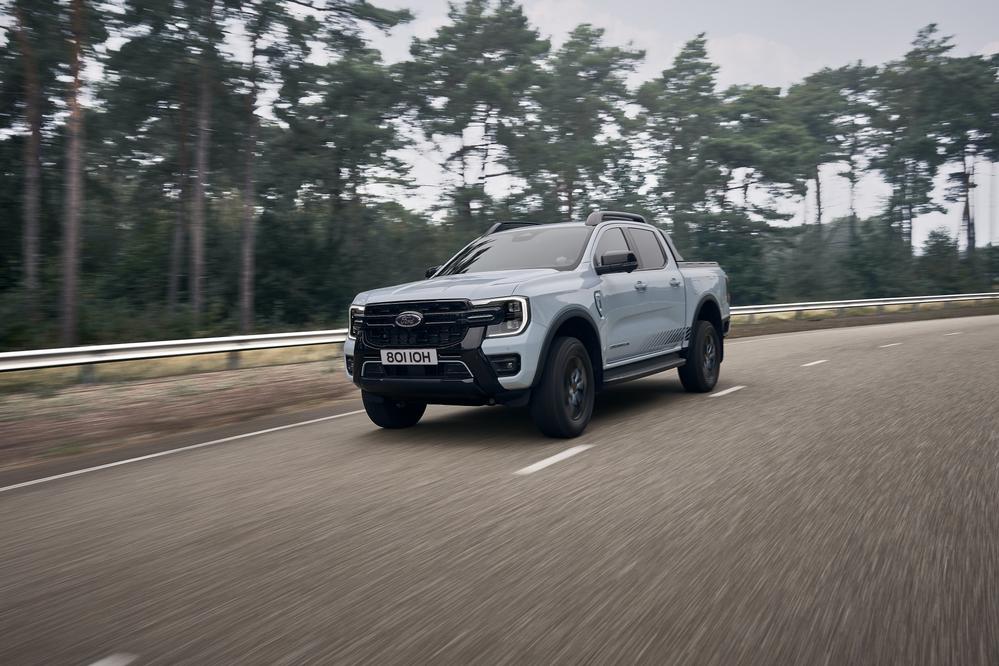
Currently, Ford offers cab‑chassis configurations for non‑PHEV Ranger variants—but not for the PHEV model. The PHEV lineup is listed only as double‑cab Utes, with no cab‑chassis body style offered at launch.
Without a factory cab‑chassis PHEV, fitting a Slide‑On camper or bolt on canopy (which require a flat tray) is challenging. It’s unclear if the tub will be removable in favour of a custom tray. Hopefully it will follow suit, the diesel models so 3rd parties can create a plethora of practical tray fit outs. However, depending on battery position and electronics removing the tray could potentially void warranty —or the vehicle must be retrofitted by a specialist (with potential complications around wiring and electronics).
Ford has not officially announced a PHEV cab‑chassis model for Australia. Prospective buyers seeking a warranty‑safe fitment for a Slide‑On camper should watch for a future cab‑chassis PHEV release or consider an alternative hybrid or diesel cab‑chassis if immediate camper installation is required.
Currently Trayon has the ability to convert the upper Ranger models that only come as pick-ups and not cab/chassis, by reintegrating the sensors in a unique and integrated manner – Trayon can give you all the comfort and options with added safety like cross traffic alert in a tray back version so it stands to reason that we should be able to do this to the new PHEV models once they are released but we need to see one first to know if it is indeed possible.
Conclusion
The 2025 Ford Ranger PHEV integrates a 2.3 L EcoBoost petrol engine with a 75 kW electric motor to deliver 207 kW of power and 697 Nm of combined torque, while retaining the Ranger’s 3,500 kg braked towing capacity. Its 11.8 kWh battery provides up to 49 km of electric‑only range before the petrol engine automatically takes over for unlimited distance. Charging via a 15 A public AC outlet takes approximately four hours, while a standard 10 A household socket requires around 6 h 53 min.
On‑board power via the Pro Power Onboard system offers up to 6.9 kW (two 3.45 kW tray sockets and one 2.3 kW cabin outlet), enabling simultaneous use of multiple high‑draw devices—tools, cooking appliances or campsite gear—direct from the ute battery.
With a payload range of 973 kg (XLT) down to 808 kg (Stormtrak) and the same ground‑clearance and 4WD hardware (2H, 4A, 4H, 4L, rear‑diff lock) as diesel models, the PHEV variant preserves traditional utility while adding hybrid flexibility.
For prospective campers wishing to tow or put a static load like a slide on camper on the back may see benefits if their intention is to use powered sites at caravan and holiday parks. Even a weekend away off grid might see some benefit for running fridges and induction cooktops, however you’d have to drive mostly in petrol mode to reserve the supply for camping accessories.
Those looking for extended trips would probably see little benefit from the hybrid system if there were no facilities to charge it.
In summary, the Ranger PHEV offers a data‑driven balance of electric‑drive efficiency and conventional petrol range, matching its diesel siblings in towing and off‑road capability, while providing enhanced on‑board power for work and recreational users.